Van Thi Diep, PhD
Artist | Philosopher | Visionary
Healing the collective story by remembering the magic and beauty of being human.
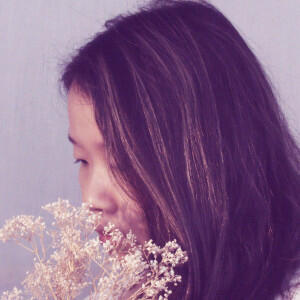
A Journey of Learning to Be Authentically Human
For most of my life, I yearned to belong. No matter where I went, I felt simultaneously “too much” and “too little” for the environment I was in. I was labelled by people as shy and talented, but I had always known that I was not being seen for who I really was. Externally, I was a top student, a good friend, or a valuable employee. But internally, I was a struggling to come out of my metaphorical shell.I didn’t know the difference between who I was and who others thought I should be. This made it difficult for me to appreciate the parts of myself that I wanted others to value. In particular, my empathic ability to tune into the energies and emotions of those around me was interpreted as my own defectiveness. Only when the pain of living a misaligned life was too intense that I made a leap of faith; I quit my stable professional job as a landscape architect and returned to school to study the spirituality of landscapes. Not long after, I encountered an existential crisis—or what I would now call a spiritual initiation—and for the first time, I became aware of how much I had deprived myself of happiness because of the stories I believed in of what I deserved in life.Since then, I have been on a journey of healing. From psychotherapy to energy work to mysticism to academic and independent research projects to courses and certifications, I gained wisdom about myself and the world. I discovered what was at the crux of my healing journey: my identity was entrenched in generational and collective subconscious beliefs about disempowerment, oppression, unworthiness, shame, and not-belonging. And so, my personal journey became one of clarifying my role in the collective healing and transformation of humanity. There are many threads to collective healing, but ultimately, it is a co-creative process between awareness and faith. Our ability to change the story of who we are, and our humility to surrender to a greater power, work together to manifest intention into reality.
My role is to help tell a story that we are worthy, that we belong, and that the world is beautiful. To retrieve the lost fragments of these stories, I also bring our shadows into the light. I may use words, images, or just my presence, but my most essential tool is trust—the trust in the nature of who we are and who we were meant to be.
I share non-fiction writing and images on my blog, Musings Between Heaven and Earth, and on my photo wall, Glimpses of a World That Holds Us. To get exclusive updates, join my supporter's circle, or shop my creative projects, visit A Flourishing Commons.
Credentials
My work is based on the combination of intuitive knowing and professional training. Below are the qualifications I've collected related to place and belonging, environmental design and philosophy, ecotherapy, and life coaching.
Certified Forest Therapy Guide - (Association of Nature and Forest Therapy Guides & Programs, 2023)
PhD in Environmental Studies (York University, 2021)
Certified Coach Practitioner (Certified Coaches Federation, 2020)
Human Design Specialist Certification – Level 2 (Quantum Alignment System, 2020)
Year-Long Training in Ecopsychology (with Andy Fisher, author of Radical Ecopsychology, 2020)
Master of Arts in Humanities (York University, 2015)
Master of Landscape Architecture (University of Toronto, 2007)
Bachelor of Architectural Science (Ryerson University, NKA Toronto Metropolitan University, 2004)
Contact Me
Returning to the Beginner's Heart Through Art
I create digital illustrations about nature, nostalgia, sacred femininity, and childhood innocence. Click on an image to expand. Art prints and digital accessories are available for purchase at my shop at A Flourishing Commons.

Goddess of Hope and Truth

Goddess of the Earth

Goddess of the Moon

Surrender to the Path of the Sacred Cosmos

Only With the Heart, Quote from Antoine de Saint-Exupéry's The Little Prince, translated by Katherine Wood (1943).

Place of My Song-Dream, Quote from Kenneth Grahame's The Wind in the Willows (1908).

Trees are Sanctuaries, Quote from Hermann Hesse's Wandering: Notes and Sketches (1920), translated by James Wright (1972).

No Place Like Home, Quote from Frank Baum's The Wonderful Wizard of Oz (1900).

Feel a Prayer, Quote from Lucy Maud Montgomery's Anne of Green Gables (1908).

Everything is Made Out of Magic, Quote from Frances Hodgson Burnett's The Secret (1911).

Spring Night Carousel

At the Cliff's Edge

Dried Flowers in the Winter

Afternoon Tea in the Conservatory

Peony Fairy Magic

Cabin in the Woods Under a Full Moon

Girl Under the Wisteria

Joyful Meadows at Golden Hour


Finding Togetherness in Our Brilliance Through Phenomenology
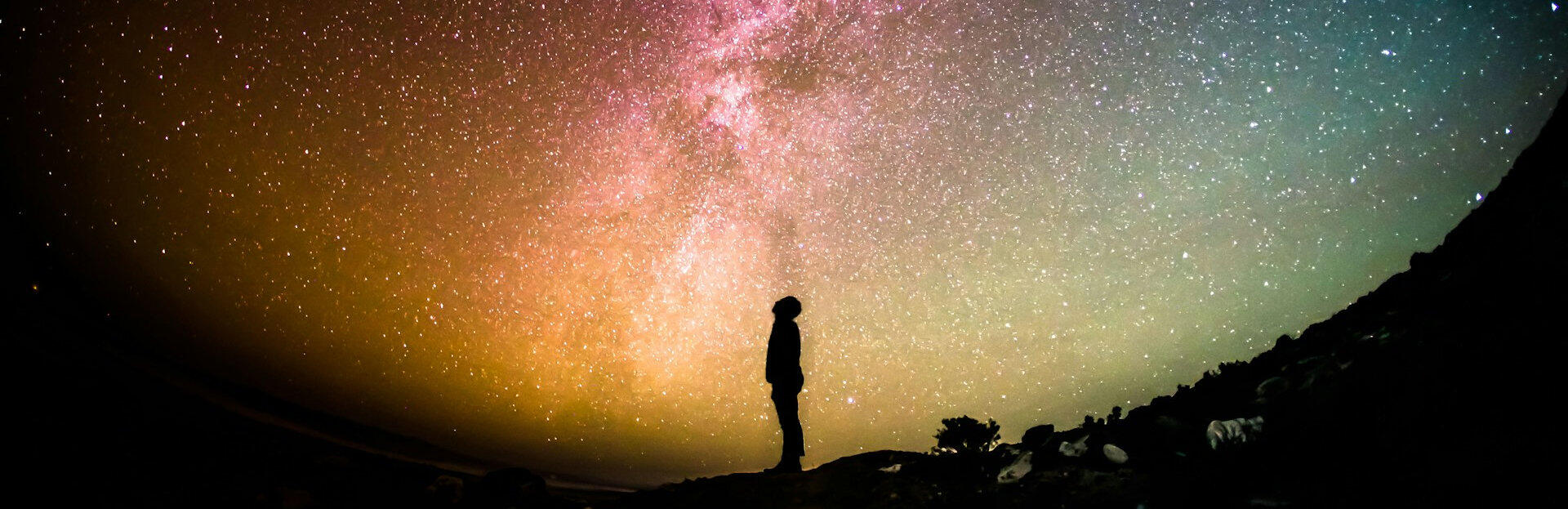
Phenomenology (the study of experience) is like stargazing with human stories. Each individual story may seem like a speck of dust in the dark night, but together in our glimmering starlight, they become meaningful constellations. The constellation patterns (i.e., study topics) that I find most attractive are the inconspicuous ones that reveal our deepest relationship with nature, both internally and externally.
Shifting Paradigms
To heal our mind-based society, we need to question why we desire knowledge. At the root of this complex question is a simple answer: we want to know more about who we are and why we exist in the world. Therefore, in essence, knowledge is the pursuit to re-discover what we intuitively know but have forgotten as human beings. Since our experiences are made conscious at a personal level, we learn about each other through narratives. At a cultural level, we learn about humanity through a process of storytelling and storylistening.Traditional education, particularly approaches based on the scientific method, assumes that knowledge is objective and research is unbiased. But human experiences do not exist in vacuums. We communicate and make sense of the world because we already have preconceptions of the world within us (Hans-Georg Gadamer, Truth and Method, 1960). Knowledge is biased because human experience is biased. To create new knowledge means to disturb old biases and re-establish new agreements of understanding.
Empowered Knowledge
Destructive paradigms are created by knowledge hierarchies. That means, some forms of knowledge are validated and institutionalised, some forms survive through resistance, and some forms are ridiculed and persecuted out of existence. To escape the grasp of old paradigms, we first need to learn to acknowledge our own individual way of knowing and being in the world.What people often consider as truth, or how things are, are merely interpretations of experience. Not everyone has the same interpretations of reality. If everyone were to see the world through the exact same lens, you and I wouldn't need to be here. Yet, some interpretations are more nurturing than others and this is where we hold power. We can respect someone's way of knowing but also accept that we have our own choice. We can choose a different meaning in life.We can choose to see ourselves as brilliant beings in an expansive universe or choose to see ourselves as nothing of value—mere dust fading away into nothingness.
Embodied Existence
If we forget to choose and let existing knowledge paradigms take over, we become nothing but walking computers. What makes humans not computers is that our knowing is embodied in flesh and our experiences are emplaced in a landscape. Studying landscapes brings us closer to understanding the narratives of our human existence.Through landscapes, we access our interpretations of nature and culture, reveal the power and limitations of language, learn to acknowledge the reciprocity of life, and choose to participate in the world. If the world was a garden, we would be the soil, the seeds, the plants, the designers, and the gardeners. We each play roles in all the processes of making the landscape the place we come to belong to.Our predicament is knowing when to take on a role, when to work with each other, and when to support another. We clarify our ever-evolving roles by evaluating our past, present, and future participation in this landscape, individually and collectively. To weed out old projections and to nurture an environment of abundance, we make space for more authentic stories of human experience. Our reflections are our stories and they are what create the world.
Projects and Articles
Reclaiming the Passive Voice: Stories of Women Who Leave Landscape Architecture, 2024
To disturb the dysfunction of historical patriarchy, as manifested in a gender gap in the case study of landscape architecture, this research study seeks out the most “useless” stories in the eyes of its system: the stories of those who are not part of the system any longer. In honouring the stories of these women first and foremost before using these stories for the system’s agenda, what is of value for an old paradigm shifts into a new narrative and paradigm that recognizes every human’s unconditional worthiness. Read report | Watch Presentation
Nature, Self, and Being in the World: Revealing a Flourishing Ethics in Landscape Architecture Through Poignant Landscape Experiences (PhD Dissertation), 2021
What do poignant landscapes mean to landscape architects? How do landscape architects envision their own flourishing? This is a self-reflexive research study that involved the analysis of 15+ professional association documents, 53 survey participants, and 14 interviews. This project was awarded a SSHRC doctoral scholarship and a LACF Annual Research Grant. A selection of excerpts from the research is also found in my book Poignant Landscapes. Read dissertation | Read Summary
The Romantic Landscape: A Search for Material and Immaterial Truths Through Scientific and Spiritual Representation of Nature, 2020
The interdependency between art, faith, and science in Romantic landscapes shapes our perceptions of landscapes today. The Romantics found Truth in Nature through religious and scientific interpretations of the world. The meaning of life was dependent on the search for revelation in the material and spiritual worlds, and landscape was a vehicle that allowed for this revelation. Read Article
The Landscape of the Void: Truth and Magic in Chinese Landscape Painting, 2016
Using Heideggerian hermeneutics and Chinese Daoism, landscapes can be seen as the literal and metaphorical Void between mortality and divinity, earth and sky. Disturbing what is subject and object, what is visible and invisible, I discover that the magic of landscape lies in the paradox: the in-between state where logic is inverted, Void is nothingness, truth is sought, and belief is magical. Read Original Manuscript | Read Published Article
Belonging to Inner and Outer Nature Through Ecospirituality
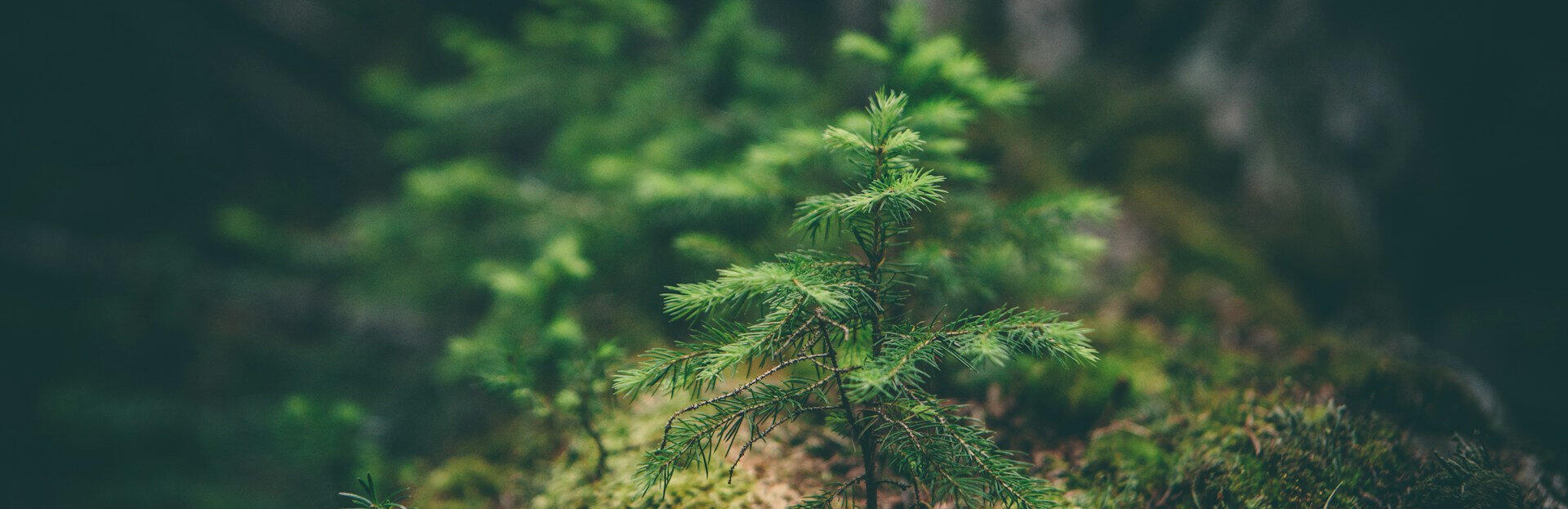
To know what it means to be human is to understand nature. "Just be. Be yourself. A community surrounds you." This is the message I intuited from the moss that surrounded me in a forest. This wisdom is also what I believe to be the essence of nature experiences: to create time and space to feel, to be witnessed, to be loved, and fundamentally, to just be.
Nature’s Messages of Self-Worth and Belonging
Nature is interpretative. It is the lens we use to relate to the world. This includes the world around us (e.g., trees, rocks, water) and the qualities within us (e.g., human nature as personality). Environmentalists often use the term “nature-connection” to describe health and sustainability goals related to human experiences in nature, but within the idea of “nature-connection” is an element of cognitive dissonance. To connect with nature would essentially be to re-create a human-nature binary in the attempt to connect two ideas (i.e., human and nature) that were not separate in the first place. But with awareness and intention, experiences of nature can teach us how to mend those binaries.
1. Nature is everywhere: nature hierarchy is an illusion
When we create mental limitations on what can be defined as nature (especially “pristine” nature), we create a spiritual narrative of inequitable worthiness: those who have access to nature are more worthy to belong on Earth, to heal, and to become whole, while those who don’t are unworthy of belonging and healing. Well, this narrative is completely false because returning to our nature is our spiritual purpose here on Earth!Indeed, over half of the world's population live in urban areas. Moreover, recreation and wellness in natural environments have historically been, and are still in many places, inequitable occurrences. So, to heal humanity’s relationship with nature, and fundamentally with ourselves, we cannot insist on ushering people into pristine forests, meadows, and beaches for therapeutic experiences.A major component of nature therapy is mindfulness. To recognise the mindfulness opportunities around us, we need the mental space to value nature in urban areas as real nature and not low-grade substitutes for suburban or rural conservation areas, provincial or national parks, countryside, or wilderness.
2. The destination is always our inner nature
Mental hierarchies of nature also shift our focus from our inner world to our outer world. Instead of looking within, people may turn to worshipping nature (and culture) as a way to cope with difficult feelings of unworthiness and not belonging. But to love external nature and to take care of our planet, we need to know how to love ourselves.The capacity to love ourselves in our own nature is reciprocal to the awareness of how much nature loves us. This love is unconditional. It is not an imbalanced kind of worshipping since we are no less sacred, worthy, and natural as the 100-year old tree in a forest.The relational processes found in a forest or another “natural” setting is the same as the ones we have with family and friends. Relationships can be supportive, complicated, or even hostile. We usually feel more at peace in natural settings because other natural beings are not conditioned with judgmental narratives like our human counterparts. These environments more easily offer us a non-judgmental container to work through the stuff in our inner world.
3. Authentic equality is found in non-judgment
In nature-based community activities where all living and non-living beings in an environment exist in reciprocity without hierarchy, we relate in authentic equality. This type of coming together, to me, is genuine activism. Without power struggles, without judgment, we invite change into our world, socially and environmentally.Through humility, openness, and trust, change occurs in ourselves and in the world around us, because nature knows its course.
4. Our home in nature is a commitment of self-love
The harmony of collective humanity is contingent on the commitment to a non-judgmental belief for all human lives: nobody should feel that they don’t belong on the earth they stand on and to the inner and outer nature of their own existence. We embody this belief by honouring our own belonging to life.Our home in nature starts with our sense of self in our individual universes. This home is not built of trees, flowers, or stones, but rather the words we use to bring the magic of trees, flowers, and stones into each other’s lives. The lessons of nature exists well beyond forests and meadows when we endeavour to bring the magic of life to every little universe we encounter.
Card Decks
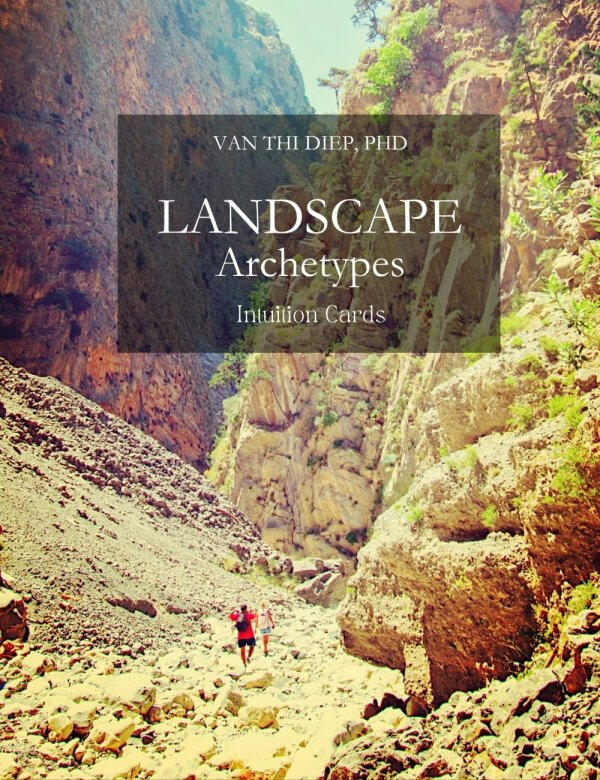
Landscape Archetypes Intuition Cards
The most primal interconnection within human consciousness is the reciprocal relationship between the inner landscapes of our psyche and the outer landscapes of our planet. Our Life Journey, the sojourn through these landscapes, is our temporary stay on Earth as human beings, but also our timeless engagement with the truth of our divinity. Each piece of landscape we encounter teaches us a lesson about this duality. Landscape archetypes exist at the threshold of this interconnection.Use this deck of 52 cards + information pamphlet to help navigate your personal journey and strengthen your intuitive knowing of our collective sacred journey here together. The landscapes featured come from my own private travel photo collection. Watch the promotional video on YouTube!Available as physical deck (poker-sized) with tuck box from The Game Crafter for $27.99 USD and digital deck on the Deckible App for $8.99 USD.
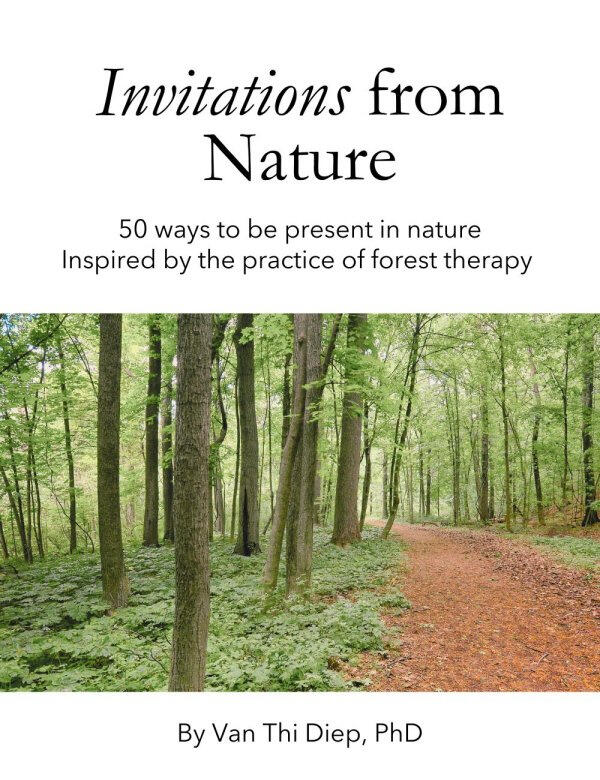
Invitations from Nature – Forest Therapy Inspired Card Deck
Nature is always offering us invitations to participate with her attentively in the present moment. By being present with nature, including our own nature, we are repairing and nourishing the relationships we have with ourselves and others, the more-than-human world, and our sense of time.This card deck is a collection of 50 prompts to remind you of the simple but significant ways you can return to nature through your senses. Also included are 2 information cards about forest therapy and the power of invitations. Watch the promotional video on YouTube!This deck uses stock art images under Canva’s Content License Agreement. Available as physical deck (poker-sized) with tuck box from The Game Crafter for $25.99 USD and digital deck on the Deckible App for $8.99 USD.
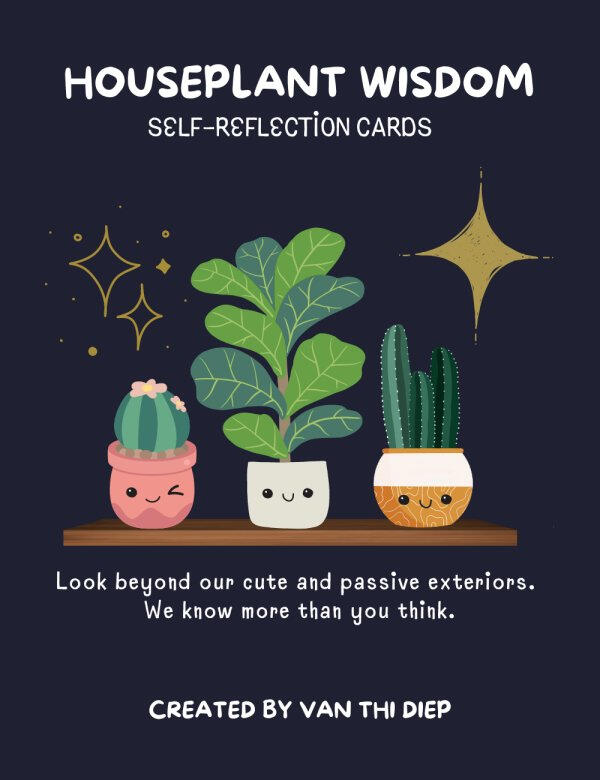
Houseplant Wisdom Self-Reflection Cards
Us humans can learn a lot about being alive from other forms of nature, but we don’t always need to seek the gurus in the wilderness to find that deep wisdom. In their quiet perceptiveness of being alive and being loved by you, your beloved houseplant buddies have mastered many lessons about existence. Give them a chance to teach you about worthiness, self-care, and being open to the magic of life.This deck uses stock art images under Canva’s Content License Agreement. Available as physical deck (3.5" square) with tuck box from The Game Crafter for $27.99 USD and digital deck on the Deckible App for $6.99 USD.
Healing the Collective Narrative Through Language
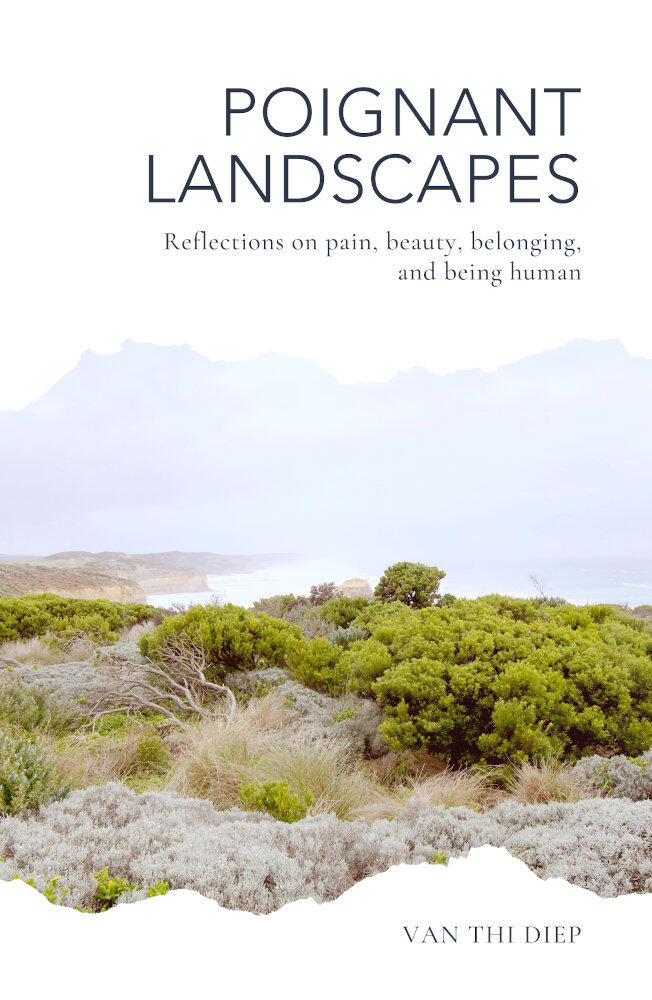
Poignant Landscapes: Reflections on Pain, Beauty, Belonging, and Being Human
What is behind the modern soul’s quest for meaning in life? In the search to find belonging in our cultures, lovability in our relationships, worthiness in our economic and political systems, and sacredness through the worshipping of all things between technology and nature, what is it that we are truly looking for?Even the uninspired among us cannot help but be mesmerized by beautiful landscapes, find reassurance in calming landscapes, and be in awe of the force of nature in powerful landscapes. But how often do we stop to contemplate the existential relationship we have with these landscapes?In the liminality of poignant landscapes, that is, the space between the external landscapes that move us and the psychological landscapes that guide us, is a portal to life’s most profound questions: Who am I? Why am I here? Who do I want to be? And what world do I want to live in?Using the negative space found in language, ecophilosopher Van Thi Diep delicately weaves together insights from her academic research study on place-making and what it means to flourish as a landscape architect with personal ruminations on self-acceptance, belonging, and healing social trauma. Through these reflections, she invites you on a vulnerable yet courageous journey to look inside the poignant landscapes that shape our individual soul paths as well as the ones we all share as humans here on Earth together.In the wisdom of these poignant landscapes is the permission to feel the pain of being human, to be loved exactly as we are without conditions, and to be inspired by the sacredness of life. This collection of short essays, poetry, and photographs wistfully mirrors the fluidity of landscapes by transcending the binaries of intellectualism and emotionality, inner and outer world experiences, and individual and collective existence, to return to what the modern soul wants most: the knowing that true belonging does not exist outside of us, but instead, is found intuitively within.Publication Date: January 15, 2024
Categories: Nature Philosophy, Inspiration and Personal Growth, Landscape Architecture
Page Count: 111
Available as: Hardcover with dust jacket (colour interior), paperback (black and white, Amazon exclusive), and e-book.
Working on...
A self-help book that merges personal empowerment with social-environmental issues and spirituality. Working title, Love Yourself to Change the World: Spiritual Lessons Towards Hope, Purpose, and Social Healing
A children's picture book about remembering the beauty of life, trusting our inherent lovability as natural beings, and mending the binaries that keep us from feeling whole. Working title, The Magic of Poetry and Courage
A collection of short essays / micro non-fiction about acceptance, collective healing, and returning to our authentic nature. Working title, All That's Left Is Beauty.
Privacy Policy
Last updated: January 12, 2026At the spiritual level, we are all interconnected. That means we inevitably share spiritual data with everyone and everything else in the universe, which makes ultimate privacy practically impossible! But I value human flourishing—and that’s the only win-win scenario for us as a species—so your empowerment to set personal boundaries and make autonomous choices is important to me. Our human minds interpret this as privacy, so this Privacy Statement is here to inform you about what you are getting into by using this website (www.vtdiep.ca) so that you can make your very important choices!First, my hosting company uses SSL (encryption) to protect your data in transit to and from this website as well as industry-standard security measures to protect the integrity of the website, and in turn your data. Second, other than your IP address, which may be automatically collected for some purposes as outlined below, the only other information I store on my website is information that you provide freely:Newsletters
I do not collect emails for newsletters on this website. You may subscribe to my newsletter through events I host or through my membership site (www.flourishingcommons.com) linked to this website. When you subscribe, I collect your email so that I may send you extremely infrequent updates about what is going on in my world. I use MailerLite for my newsletters. MailerLite is certified to the EU-US Privacy Shield Framework and Swiss-US Privacy Framework. My newsletters send a message back to MailerLite when they are opened. I view statistics on whether you’ve opened the newsletters or not. This helps me to better design my future content.Want to be removed from the list? Click unsubscribe at the bottom of any newsletter.Contact Forms
Contact forms allow you to send me messages. My contact form requests your name, email address, and the message that you wish to send me. Your IP address is also captured by the system. The contact form uses reCAPTCHA V.2, which is a free antispam service provided by Google that determines if an action is performed by a human or a bot by analysing user activity. Once the system determines you are not malicious, your message will then be transmitted to me via email.Purchases
Purchase links on my website may direct you to third-party retailers such as The Game Crafter, Deckible, Amazon or other online bookstores. These purchases are processed and fulfilled through the retailer’s website. Please refer to the third-party's website for more information about their privacy practices and policies.Use of Cookies
My website uses cookies. I'm not sure why these tiny text files placed on your hard disk by a webpage server have the same name as those sweet snacks that many of us like to eat. But unlike the health risks of eating too many physical sweet cookies, these digital cookies cannot be used to run programs or deliver viruses to your computer. These cookies are uniquely assigned to you and can only be read by a web server in the domain that issued the cookie to you.One of the primary purposes of cookies is to provide a convenience feature to save you time. For example, if you personalize a webpage, or navigate with a site, a cookie helps the site to recall your specific information on subsequent visits. This simplifies the process of delivering relevant content, eases site navigation and so on. When you return to the website the information you previously provided can be retrieved, so you can easily use the site’s features that you customized.Web beacons, also known as clear gif technology, or action tags, may be used to assist in delivering the cookie. They compile aggregated statistics about website usage, such as how many visitors clicked on key elements (such as links or graphics) on a webpage, blog, or newsletter.You have the ability to accept or decline cookies (yes, including the sweet physical ones as well). Many web browsers automatically accept cookies, but you can modify your browser settings to decline cookies if you prefer. If you choose to decline cookies, you may not be able to fully experience the interactive features of the websites you visit.Website Activity Tracking
I use Google Analytics, a service provided by Google, to help me understand how visitors use this website. Google Analytics uses cookies to collect information about your usage, such as your IP address, browser type, and pages visited. This data helps me know that I'm not alone in the world and that human beings may be interested in what I do and say. You can learn more about Google's data practices at https://policies.google.com/technologies/partner-sites. You can opt-out of Google Analytics by downloading the Google Analytics opt-out browser add-on, available at https://tools.google.com/dlpage/gaoptout.My hosting company may also collect and store basic data on those who access the site to help them improve their services and resolve potential issues. The data stored in this manner is not traceable back to any individual and is deliberately generalized. When you use the Internet, search engines such as Google will track website visitors. If you do not want to be tracked, please consider using a private browser window. The information that these search engines store is not traceable to one individual and is very generic in nature.Embedded Content
My website may include embedded content such as videos. Embedded content behaves in the same way as if the visitor has visited the other website. These websites may collect data about you, use cookies, embed additional third-party tracking, and monitor your interaction with that embedded content, including tracing your interaction with the content if you have an account and are logged in to that website.Note to International Users
This website is hosted in the United States and owned in Canada. By providing your information to the website, you are consenting to the transfer of your information to the United States for processing and maintenance per this privacy statement. You are also consenting to the application of Canadian law in all matters concerning the website.
Changes to this StatementI may occasionally update this privacy statement. When I do, I will also revise the last updated date at the top of the page.Questions and Concerns
If you have any concerns about this privacy policy, send me a note through my contact form.